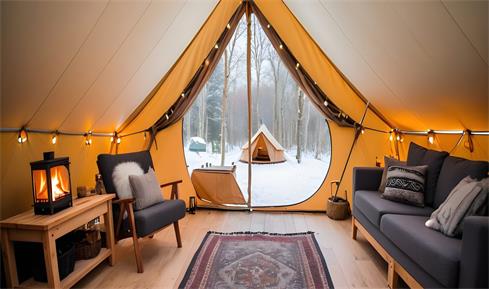
As glamping continues to evolve into one of the most dynamic segments of outdoor hospitality, understanding the materials behind premium tents has become essential. Whether you are a luxury resort developer, outdoor gear retailer, or adventure enthusiast, the right tent fabric determines durability, comfort, and overall guest experience. Everich Outdoor examines the latest glamping tent material trends, their performance differences, and how to choose the most suitable option for your business or personal setup.
1. Popular Types of Glamping Tents
Yurts
Modern yurts are inspired by Mongolian heritage but enhanced with insulated layers, wood framing, and durable canvas. These structures provide year-round comfort and are ideal for eco-resorts and semi-permanent glamping destinations.
Safari Tents
The classic safari tent—characterized by large canvas walls, extended porches, and panoramic windows—remains one of the most popular options for luxury glamping resorts. Their high ceilings and structural integrity make them perfect for upscale outdoor accommodations.
Bell Tents (Tipis)
Bell tents combine rustic charm with portability. Their conical shape and single-pole design make them easy to set up, while breathable cotton canvas ensures comfort in warm climates.
Geodesic Domes
These innovative spherical structures provide maximum wind resistance and energy efficiency. Commonly used in eco-friendly glamping sites, geodesic domes can integrate transparent panels, insulation layers, and even solar features.
2. Common Glamping Tent Materials (2025 Overview)
Polyester Fiber
- Pros: Cost-effective, UV-resistant, quick-drying, and lightweight.
- Cons: Limited breathability; not ideal for high temperatures.
- Best For: Entry-level glamping tents or short-term events.
Tear-Resistant Nylon
- Pros: Lightweight, flexible, and quick to set up. Suitable for travel glamping or pop-up accommodations.
- Cons: Less durable under continuous UV exposure.
- Best For: Mobile glamping setups and warm climates.
PVC-Coated Polyester (Viny
- Pros: 100% waterproof, mildew-resistant, and easy to maintain. Excellent for humid or rainy locations.
- Cons: Heavier and less breathable.
- Best For: Permanent or semi-permanent glamping sites in wet regions..
Canvas (Cotton or Polycotton Blend)
- Pros: Natural breathability, exceptional insulation, and aesthetic appeal. Canvas glamping tents maintain comfortable interior temperatures in all seasons.
- Cons: Requires periodic reproofing and UV protection.
Acrylic Fabric
- Pros: Combines breathability, color retention, and water resistance. Lightweight yet robust—ideal for premium modern glamping designs.
- Cons: Higher material cost.
- Best For: High-end glamping domes and architectural tents.
3. Factors to Consider When Choosing Tent Materials
Climate and Environment
For variable weather conditions, canvas and polycotton blends provide superior comfort. In humid or rainy regions, PVC-coated polyester is more practical.
Portability
Lightweight fabrics such as nylon or polyester are ideal for mobile glamping units or temporary setups.
Maintenance Requirements
Canvas requires occasional cleaning and reproofing, while synthetic materials (like vinyl) need minimal maintenance.
Aesthetic and Brand Positioning
For a natural and rustic experience, go with canvas or wood-framed designs. For a modern eco-resort aesthetic, opt for acrylic or hybrid materials that support sustainable production.
4. Cost Breakdown: Investing in Quality Glamping Tents
| Tier | Price Range (USD) | Common Materials | Ideal Use Case |
| Entry-Level | $300 – $700 | Polyester or Nylon | Short stays, pop-up events |
| Mid-Range | $800 – $1,500 | Canvas or Polycotton | Frequent personal or small resort use |
| Luxury | $2,000 + | Polycotton, Acrylic, Wood Frames | Premium glamping resorts, long-term installations |
5. The Importance of Proper Ventilation
Regardless of material choice, ventilation is essential for a comfortable glamping experience. Mesh windows, air vents, and breathable fabrics reduce condensation and prevent mold. This feature is especially important in canvas glamping tents or tropical environments.
6. Market Insights: The Future of Glamping Tent Materials
According to 2025 outdoor hospitality reports, the global glamping market is projected to exceed US $4 billion, driven by sustainable travel and eco-design.
Emerging trends include:
- Use of recyclable fabrics (RPET polyester, eco-canvas)
- Integration of solar and smart-ventilation systems
- Demand for custom OEM & ODM glamping tent solutions
As a professional outdoor products manufacturer, Everich Outdoor provides OEM and ODM services for premium glamping tents—combining functional design, sustainable materials, and precision craftsmanship to meet global hospitality standards.
👉 Explore Everich Outdoor’s custom glamping tent manufacturing services here
7. Conclusion
A successful glamping experience starts with selecting the right materials. Whether you’re sourcing glamping tents for sale or designing a bespoke outdoor resort, consider climate, maintenance, and long-term brand image.
By partnering with Everich Outdoor, you can ensure that your glamping tents combine comfort, durability, and sustainability, reflecting the highest standards of outdoor living in 2025 and beyond.